A sales engagement platform automates outreach sequences across email, phone, and tasks so reps follow up at scale. For high-ticket teams on booked calls, engagement tools handle outbound cadence. AI Sales Ops handles post-booking follow-up, routing, and show rates. That is the layer that protects CAC and ROAS.
If you run paid ads to a calendar, the engagement stack is only half the picture. The other half is turning bookings into live calls without spending more on media.
SalesKick guarantees for paid ad funnels
- Lower CAC: more live calls and closed deals from the same ad spend
- Save money on ads: fix show rate before you scale budget
- Higher ROAS: turn booked calls into revenue, not empty calendar slots
 Show Rate Course
How To Increase Sales Call Show Rates
Free step-by-step training with 6 videos and a 44-page workbook. Learn funnel messaging, lead nurture, scoring, and calendar management.
Watch The Show Rate Course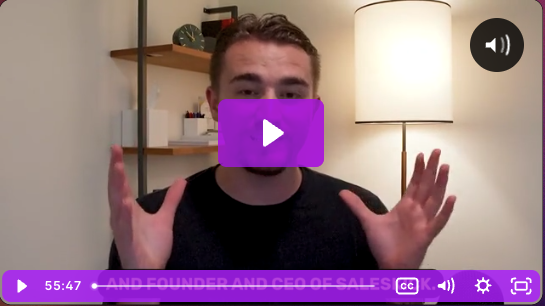
Your reps know they should follow up. They still miss touches when volume spikes.
A sales engagement platform turns follow-up into a system. Emails go out on schedule. Calls land in task queues. Managers see who is sticking to the cadence.
That helps outbound teams and SDR pods. It also solves a different problem than post-booking show rate ops, the part that determines whether your ad dollars actually produce revenue.
What Is a Sales Engagement Platform?
A sales engagement platform is software that automates multi-step outreach to prospects. Core pieces include:
- Sequences: timed steps across email, call, and LinkedIn tasks
- Templates: approved messaging reps can send fast
- Dialer and email sync: activity logs back to the CRM
- Analytics: open rates, reply rates, and meetings booked per sequence
Popular examples include Outreach, Salesloft, and Apollo sequences. They help reps work a list without rebuilding every touch from scratch.
The goal is consistent follow-up at scale. For high-ticket closers, engagement platforms shine on outbound and nurture lists. They are often weaker on the minutes-after-booking window that drives show rates, and that window is where CAC and ROAS live or die on paid traffic.
Sales Engagement vs Sales Enablement
These categories get mixed up because both help reps sell. They focus on different moments.
| Sales Engagement Platform | Sales Enablement Platform | |
|---|---|---|
| Primary job | Automate outreach cadences | Store content, training, and playbooks |
| Typical user | SDRs, BDRs, outbound AEs | Enablement, marketing, sales ops |
| Core metric | Reply rate, meetings booked | Content adoption, ramp time |
| Best moment | Before a meeting exists | During and after rep onboarding |
Engagement asks: did we follow up enough times in the right order?
Enablement asks: does the rep know what to say when someone replies?
Booked-call teams need a third layer: AI Sales Ops. That layer qualifies inbound leads, routes them, confirms meetings, and recovers no-shows. See our lead management software guide for the full stack view and best sales enablement software for the enablement side.
Where Engagement Fits in a Booked-Call Funnel
Paid ad funnels create two follow-up jobs. Most teams only buy software for one.
Job 1: Outbound and nurture (engagement)
Leads who did not book yet. Old leads who went cold. Webinar registrants who never scheduled. A sales engagement platform runs the long cadence here.
Job 2: Post-booking ops (AI Sales Ops)
Leads who already picked a time. Confirmation texts. Reminders. Pre-call prep. No-show rebook. This window is measured in minutes and hours, not days.
Mixing both jobs in one generic sequence often hurts show rates. A seven-day email cadence is wrong for someone who booked for tomorrow at 2pm.
RevOps teams we talk to often run Outreach or Salesloft for Job 1 and SalesKick for Job 2. The CRM stays the record. Each tool owns a clear slice of follow-up.
If show rate is your bottleneck, fix Job 2 before you add more outbound sequences, or before you raise ad spend hoping volume will fix revenue.
How Engagement Ties to CAC, Ad Spend, and ROAS
Most revenue teams evaluate engagement software on reply rate and meetings booked. Paid ad funnels need a different scoreboard: cost per live call, CAC, and ROAS.
The hidden leak: bookings that never become live calls
You can run perfect ad creative and still lose money. A funnel that books 200 calls at $80 per booking looks healthy. If only 45% show, you paid for 110 empty slots. CAC on closed deals climbs. ROAS drops even when CPL looks fine.
Engagement platforms rarely touch that leak. They are built for prospects who have not committed to a time yet. Once someone books, the clock changes. Speed, personal SMS, and confirmation replies matter more than another nurture email on day four.
Why show rate is a CAC lever
Customer acquisition cost is total sales and marketing spend divided by new customers acquired. When show rate rises on the same booking volume, you get more live conversations without buying more clicks.
Example math (your numbers will differ):
- 100 bookings at $100 ad cost per booking = $10,000 in media
- At 40% show rate → 40 live calls → $250 cost per live call
- At 65% show rate → 65 live calls → $154 cost per live call
That 25-point show rate lift cuts cost per live call by 38% on the same ad spend. Close rate on live calls can stay flat and CAC still falls because you closed more deals from the same funnel.
Engagement software can lower CAC on outbound by improving reply and meeting-set rates. On inbound paid ads, the fastest CAC win is usually post-booking ops: grading, routing, confirm flows, and no-show recovery.
Save money on ads without killing volume
Teams under ROAS pressure often cut budget when performance dips. That protects cash short term. It also caps growth.
The alternative is to extract more live calls from bookings you already paid for. That is how you save money on ads in a literal sense, fewer wasted bookings per dollar, without throttling campaigns that still produce qualified demand.
A sales engagement platform helps on the nurture side when leads stall before booking. AI Sales Ops helps after the booking exists. Together they reduce the need to spend more just to hit the same revenue target.
ROAS follows live calls, not form fills
Return on ad spend is revenue divided by ad spend. Bookings are a leading indicator. Live calls and closes are the outcome ROAS actually measures.
Track this chain weekly:
- Ad spend by campaign
- Bookings and cost per booking
- Show rate and cost per live call
- Close rate and CAC
- ROAS and payback period
If step three is weak, steps four and five will never match the story your ads team tells. Fix show rate before you declare a creative or audience problem.
Pair engagement metrics with lead scoring software so low-fit bookings do not consume senior closer time. Bad leads still cost money when they no-show or refund.
Show Rate Course
How To Increase Sales Call Show Rates
Free step-by-step training with 6 videos and a 44-page workbook. Learn funnel messaging, lead nurture, scoring, and calendar management.
Watch The Show Rate Course
SalesKick Guarantees: Lower CAC, Save on Ads, Increase ROAS
SalesKick is AI Sales Ops for teams that sell through booked calls on paid traffic. We stand behind three outcomes that engagement platforms alone cannot guarantee:
| Guarantee | What it means | How SalesKick delivers |
|---|---|---|
| Decrease CAC | More customers from the same funnel economics | Higher show rate and better lead grading put closers on qualified live calls, so acquisition spend converts to revenue faster |
| Save money on ads | Stop paying for bookings that never happen | AI Lead Nurture Specialist confirmations, smart routing, and no-show recovery turn existing bookings into conversations without scaling spend |
| Increase ROAS | More revenue per dollar of media | Show rate analytics and post-booking automation lift live call volume on the same ad budget, the direct path to higher return on ad spend |
These guarantees apply to the post-booking layer, Job 2 in your funnel. Keep your sales engagement platform for outbound and nurture. Add SalesKick where paid traffic meets the calendar.
Teams in the Show Rate Boot Camp often see a 26%+ decrease in CAC after fixing confirmation and booking-window basics. The playbook is the same whether you run Outreach, Salesloft, or a lean SMS stack.
Key Features to Evaluate
When you compare sales engagement platforms, weight features against your funnel shape and your paid media goals.
Sequence builder
Look for branching on reply, meeting booked, and unsubscribe. Static linear sequences age fast.
CRM sync
Activity should log cleanly. Reps will not use the tool if they have to copy notes twice.
Call tasks and prioritization
High-ticket teams still call. Task queues should surface who to hit next based on intent, not just list order.
Compliance and deliverability
Email volume affects domain health. Ask about send limits, warm-up, and opt-out handling.
Multichannel support
Email plus phone is baseline. Some teams add SMS or LinkedIn steps. Check whether SMS is native or requires another tool.
Reporting tied to revenue, not vanity
Opens and clicks are vanity if meetings do not show. Push vendors on showed meeting reporting, cost per live call, and source-level ROAS, not just meetings booked.
None of this replaces lead management software for capture and routing. Engagement sits downstream of how leads enter your system.
Engagement Platforms vs AI Sales Ops
This is the debate that matters for ad-driven revenue teams.
| Sales Engagement Platform | AI Sales Ops (SalesKick) | |
|---|---|---|
| Built for | Outbound lists and SDR cadences | Inbound booked calls and show rates |
| Timing | Days and weeks | Minutes and hours |
| Channels | Email-heavy, call tasks | SMS, email, routing, qualify flows |
| Key metric | Replies, meetings set | Show rate, cost per showed call, ROAS |
| Commercial promise | More touches, more pipeline | Lower CAC, save on ads, higher ROAS, guaranteed |
| Weak spot | Post-booking confirmation speed | Long outbound sequence management |
Outreach and Salesloft are strong products for pipeline generation. SalesKick is AI Sales Ops for ad-driven booked-call teams. It improves show rates, qualifies leads, and automates follow-up after the booking exists.
You can run both. Many high-ticket orgs do. See SalesKick vs Calendly and Calendly alternatives for how scheduling tools fit next to engagement software.
Sales Engagement Platform Comparison
Snapshot for high-ticket booked-call use cases:
| Platform | Strength | Limitation for paid ad funnels |
|---|---|---|
| Outreach | Enterprise sequences, coaching, analytics | Post-booking SMS and show rate ops need add-ons; no CAC or ROAS guarantee on booked-call layer |
| Salesloft | Cadences, dialer, revenue workflows | Same gap on instant confirm and no-show recovery |
| Apollo | Data plus sequences in one tool | Lighter ops layer for qualify-and-route flows |
| SalesKick | AI Sales Ops: show rate, routing, follow-up, guaranteed CAC and ROAS outcomes | Not a replacement for long outbound sequence tools |
Best for SDR-led outbound: Outreach or Salesloft plus CRM.
Best for paid ads to a calendar: SalesKick for post-booking ops plus engagement for nurture lists.
Calendly and Chili Piper book meetings well. They are not engagement platforms and they do not run multi-day cadences. Know which problem you are solving before you compare vendors.
How to Choose the Right Tool
Use this decision path:
- Map your funnel: where do leads enter, book, show, and close?
- Name your bottleneck: reply rate, booking rate, show rate, CAC, or ROAS?
- Match the tool to the bottleneck: engagement for replies on cold lists; AI Sales Ops for show rate and ad economics on booked calls
- Check integration: CRM, ads, calendar, and SMS must connect without manual exports
- Pilot one metric: run a 30-day test on show rate or cost per live call, not both at once
If your team runs $50k/month in ads to a booking page, show rate beats open rate as a north star. Fix confirmation and reminders before you buy another sequence template library or raise budget.
Pair lead management software when routing and scoring need a single source of truth across tools. Use lead follow-up automation for the confirm-and-recover playbook.
Frequently Asked Questions
What is a sales engagement platform?
It is software that automates multi-step sales outreach through email, calls, and tasks. Reps enroll prospects in sequences instead of sending one-off messages. Popular examples include Outreach, Salesloft, and Apollo sequences.
How is sales engagement different from marketing automation?
Marketing automation targets broad lists and lifecycle campaigns. Sales engagement is rep-driven, one-to-one, and tied to CRM activity and call tasks.
Can a sales engagement platform lower customer acquisition cost?
It can help on outbound and nurture lists by improving reply and booking rates. For paid ad funnels, CAC usually drops faster when post-booking ops lift show rate, because you convert the same ad spend into more live calls and closed deals. SalesKick guarantees lower CAC when paired with booked-call funnels.
Does sales engagement software improve ROAS?
Not by itself on inbound ad traffic. ROAS rises when more booked calls actually show and close. Engagement tools handle pre-booking nurture; AI Sales Ops handles confirmation, reminders, and no-show recovery. That is the layer that protects return on ad spend.
Do I need a sales engagement platform if I only run inbound ads?
You still need follow-up on leads who do not book and on no-shows. Engagement tools help nurture. Post-booking confirm and remind often needs AI Sales Ops, not a seven-day email sequence.
Can SalesKick replace Outreach or Salesloft?
Usually no. SalesKick replaces manual post-booking work: qualify, route, confirm, remind, recover no-shows. Keep your engagement platform for outbound cadences if SDRs depend on it.
What metrics prove engagement software is working?
Track reply rate, meetings booked, meetings showed, cost per live call, CAC, and ROAS, not opens and clicks alone. A high book rate with a low show rate means you have an ops gap, not a sequence gap.
Conclusion
A sales engagement platform systematizes outbound follow-up. That matters for SDR teams and nurture lists. It does not fully solve the booked-call moment when someone already picked a time, or the CAC and ROAS math that paid traffic demands.
High-ticket revenue teams should split the problem. Use engagement for cold and warm outreach. Use AI Sales Ops for qualify, route, confirm, and show rate recovery.
SalesKick is built for the second job with guarantees that matter to media buyers: lower CAC, save money on ads, and increase ROAS. It works alongside your CRM, lead management software, and existing engagement stack.
Start with your weakest metric. If calendars fill but rooms stay empty, fix post-booking follow-up before you add sequence steps or scale spend.
Related reading: lead management software, lead scoring software, how to increase show rates, best appointment scheduling software, and SalesKick vs Calendly.
Show Rate Course
How To Increase Sales Call Show Rates
Free step-by-step training with 6 videos and a 44-page workbook. Learn funnel messaging, lead nurture, scoring, and calendar management.
Watch The Show Rate Course